
If I could, I would move to Patagonia where the mountain air blows clean down the hills and the sun sets in angles over the steppes. I found this place through fantasy-escape-mode, a very handy mental tool I employ when things get bad in my real world, such as being an allergy-sufferer in the worst pollen season in recollection. It was on a Monday that I hit the search engine and typed ‘pictures of mountains.’ I wanted something lofty and majestic to put as my desk-top background so that, in between my clerical tasks, I could escape to another land. I searched for mountains and that is where the love-affair began.
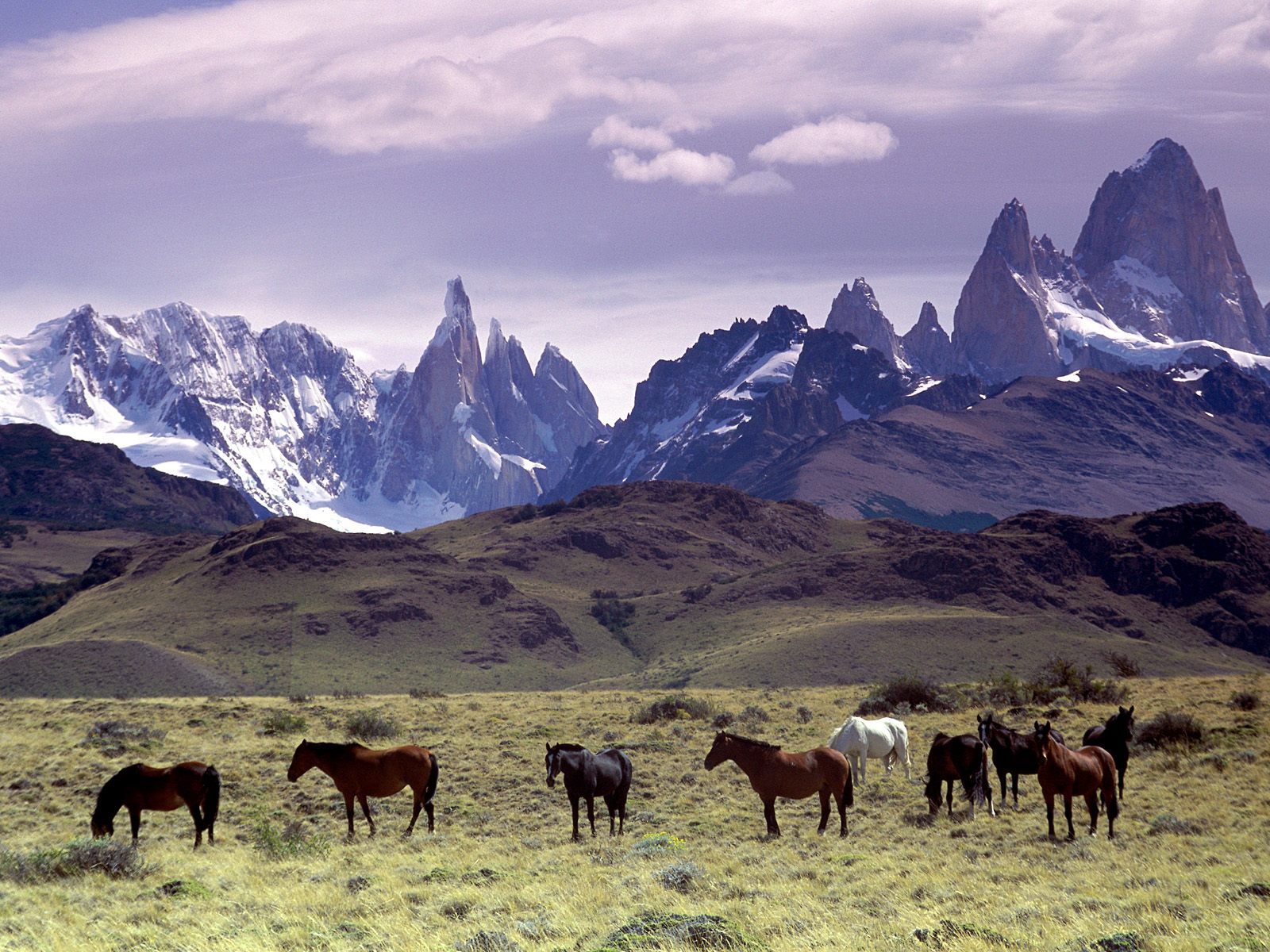
A picture popped up: low steppes with a herd of horses grazing and snow-tipped peaks rising into the sky. I can’t explain what happened to me when I saw this place. My mind stilled, settled into itself. I imagined cool, dry air flowing into my lungs. I imagined lying on the stony ground, the wind rustling the grass around me, the sky stormy-blue overhead. This picture called to me. If this were Star Trek, I would have said, “Beam me over, Scotty.” Even the soles of my feet wanted to walk barefoot over those stones.
Still, it was just a picture. I had no real idea where this was. However, I did want to know.
I have the kind of imagination that, once activated, is a bit like a baking soda and vinegar project. Once two things combine (place and longing) a chemical reaction occurs that cannot be stopped; it has to run its course. I did a new search to see if I could locate to origin of my fantasy-picture. Did I mention determination and persistence as part of this potion? Once my mind sets to a track, it does not deviate until the mission is accomplished. It was easy to discover the picture was taken in Argentina Patagonia. Patagonia! A word of legend, buried in my psyche like a forgotten bicycle in an old garage. Did I actually know anything about Patagonia, or was it the romance of the name I found alluring?
I searched google maps and found Patagonia as the southern-most region in South America, bridging the mountains between Argentina and Chile. I looked at the map and asked myself a question. Where, along that mountain range, did I think my fantasy-picture was taken? Of course, I had no reference beyond the photograph, so I opted to utilize instinct and see where it got me. It got me to El Chalten, a tiny town located in Los Glaciares National Park, population 200. I pulled up pictures from the region, which is now heralded as one of the fastest growing tourist spots for back-packer, hikers, and mountain-climbers, and recognized a distinctive mountain peak from the photograph: Mt Fitzroy. I had found my dream destination!
El Chalten is a rare town, situated within a national preserve. There are few year-long residence, but they host a rapidly growing number of tourists each year. Being at the more southern sphere of the globe, they have alternate seasons to the ones we have here in Virginia. Their peak summer season is in January and February, when we’re bundling up around wood stoves and under blankets. From the little I have learned, they have a cool, relatively dry, unpredictable climate. Wind is a near-constant companion and the weather can change in a flash. The hike to give you the best view of Fitzroy takes two days and is, by the accounts I read, not too strenuous and worth the effort. Their winters are cold, and windy, but not as harsh as their far northern counter-parts. And the park is stated by all who visit to be spectacular year-round. I say, what’s not to like?
Aside from the notable absence of over-abundant greenery, other things appeal to me about Patagonia. I like extremes of light, like the high-northern slant of sun seen in Scotland. I like unpredictable weather, perhaps because I’m used to unpredictability from a life of living inside my own head. I like rolling steppes, sparse population, and strongest of all, I like the Andes Mountains. I can’t say what draws me to them; they exert some pull over which I have no domain. They call to me by name. In the center of my being, I feel their echo. Is it because I grew up under the looming presence of another mountain range, the Colorado Rockies? It is something imbedded in my Native American genetics that makes me wish to live in close proximity to their majesty?
I can’t answer these questions. I’ve never been very good at explaining myself to myself. The best I can say is I know I want to be there, that, part of me, while sitting in Virginia, smelling the first of the Honeysuckle bloom, longs to be far away, living in Patagonia.
 Lakshmi Bertram