Pumpkin Patch

I have a pumpkin patch, though not through my own effort, desire, or design. My kids planted it this spring based on a Native American planting system termed The Three Sisters where corn, pole beans, and pumpkins are planted together. Corn, a heavy feeder, benefits from the beans which bring nitrogen into the soil. In turn, the corn stalks provide the perfect climbing frame for beans. Pumpkin plants, light feeders, provide shade to the corn and beans. These three foods, purportedly staples of native cultures that provided storable crops for winter, were planted thus to capitalize on symbiosis.

Growing in our garden this year, where we don’t have much else planted, the Three Sisters thrive. Cleverly planted in integrative harmony, each providing support, nourishment, and caring to the others, they seem very like a family. It’s been fun to watch them grow–particularly as this has not been an easy year for growing things not only in our region but all over the world. High heat is crippling much of the US and where it is not drought conditions there have been freak storms and flooding. One wishes there were a way to scoop up all that flood water up and deposit it on the hard-baked dirt, rutted with crevasses in the drought regions.

For plants to survive this kind of weather, they do rely on human intervention.

I looked out the window yesterday afternoon and my harmonic, happy plant family was wilted. The pumpkin patch looked downtrodden, drooping in the heat, and the edges of the corn leaves were dry and brittle. It was 95 degrees, not hot for us for July, but far hotter than I prefer. However, having seen the state of things, I knew I would never be able to sleep that night if I didn’t get out and water the garden.

It was hot, as I said, so I donned the only appropriate apparel, a bikini, and ventured out. I dragged the hose up the yard, waded deep into the wilted pumpkin leaves and turned the soaker on them. It made me feel better to be doing it. I imagined the cool sensation I always feel when suddenly relieved of unbearable heat, I imagined a desperate thirst being quenched by cold water.

There were pumpkins hiding everywhere amongst the foliage. I have no idea what we will do with them all, should they survive to be ripe and edible, but it was a joy just to see them; dark green globes with pale streaks of lighter green and just the beginning shading of orange in places. There were beans as well, climbing up the stalks and the first thickening of corn ears showed at various junctions.

I love to garden and haven’t been able to do much of it lately. It may have been that love-induced absorption in plant-life that prevented me from hearing the distant rumble and roll of the thunder. I first became aware of the storm when raindrops began to fall, warm as bathwater and the size of dimes. I thought about hanging up the soaker and heading indoors, but it was not clear from the partially over-cast sky how much rain would be falling. I opted to persevere, thinking too much water would probably be better than too little.

That is how my twelve-year-old daughter found me. The front door flung open as she popped her head out into the rain and shouted, “Mom! What are you doing?!”

As it would happen, that early rain had become a torrent. I looked up. The whole sky was dark, rain falling in sheets.

What was I doing?

I was watering the garden in my bikini in a down-pour.

Oh, well, at least the pumpkins are happy.

The Life of Babies

I’ve been thinking about it a lot. Babies have got it right; they’re the only ones who really know how to live life. Babies are too young to have been properly thought-programmed by their elders. They don’t yet know to believe that money, fame, the right street, the right career, the right person, or the right pair of shoes is what makes for happiness. A baby’s happiness comes from whatever is in front of them at the moment. It bubbles up uncontrollably, not because of some particular outside influence, but because the happiness is in them already—all they do is let it out. Because they habitually express what is in them, a baby lives a life of complete authenticity. If they don’t like something, they spit it out, stop playing with it, or refuse to pick it up in the first place. They never second-guess themselves, they like what they like, want what they want, and do what they do because it’s inherent in them to be that way. Babies live completely as they are, acting just as they were created. They cry when they’re sad or angry, laugh when they’re happy, eat when they’re hungry and sleep when they’re tired. And they never worry about anything. They don’t obsess over what happened yesterday or spend all their time thinking about what they’re going to do tomorrow. A baby lives for what’s happening now. Have you ever watched a baby discovering something new? Their whole existence becomes about that one moment of discovery. Even if you try to distract them, you can’t. But when they’ve learned all they can, they move on to the next discovery in the next moment. Life for a baby is an endless string of pearled moments of discovery, one after the other. Because a baby lives in this present way, they never hold a grudge. They may be upset and crying one moment, but when the next moment rolls around, they’re smiling, laying a head on your shoulder, forgiving whatever wrong-doing you may have committed. Babies also don’t know how to judge yet. A baby does not care about the color of another baby’s skin, their religion, or in what country they were born. To them, there’s just another baby—quite like themselves. And they will smile at anyone from any denomination who takes a moment to try and make them smile. Babies love like this because they haven’t yet learned how to hate. I wonder sometimes what our world would be like if we weren’t so conditioned by our up-bringing’s, if our worlds of influence did not fill our heads with ideas of who and what we should be, who and what we should like, who and what we should hate. I wonder, what kind of a world it would be if we took a few lessons from those younger than we and lived, in certain aspects, the life of babies.

Nature Girl….Or Not….?

It’s made me wonder who I am, is what spring did.

As we go through life, we acquire ways of identifying ourselves, ways to relate our individual being to the world outside. If we have an affinity for music, we may labels ourselves musicians. If we’re drawn to drawing, we might say we’re graphic artists. If we are, inexplicably, excited by algebraic equations we could proclaim ourselves rocket scientists or mechanical engineers or at the very least math brainiacs. We have boundless external identifiers to choose from and it is the combination of natural inclination and environmental influence that leads us to conclusions about who we are and guide us into who we become.

Throughout my life, I have always thought of myself a ‘nature girl.’ If I made a list of my top ten personal identifiers and named them in order of dominance, ‘nature girl’ would be in the top three—right after ‘writer’ and before ‘dancer.’ An inherent curiosity combined with a childhood that included a horse ranch, a three hundred acre preparatory school, a thousand acre Ashram, and countless hours allowed to roam cultivated the nature girl within me. My favorite pastime was wandering through the woods or over fields with the birds and butterflies for company. I grew to love all of nature; rain, snow, sunshine, mountain tops, valleys, rivers, lakes, and streams. My love of the natural world also influenced my development as a person, I’m conscious of the environment and even my consumerism became naturally oriented, all my hair and cleaning products are biodegradable, my perfume is from natural essential oils, and even my diet is free from chemical influences.

This thing—nature—overwhelming and beautiful, inspiring and terrible, fascinating and dominating, became a part of who I believed myself to be.

Until recently.

Suddenly, without alteration of my inner self, without a mutation of my natural inclinations or a decline in my usual tastes, I cannot go outside! I have allergies, bad ones, thus the natural world I have long loved is now lost to me. If I should hope to refrain from being dreadfully ill, if I should hope to be able to continue to breathe—no longer can I roam the wilds.

It’s been a shock and has taken adjustment. You may imagine I would feel sad thinking on this—but as it happens I don’t anymore. Over the long course of our lives, we are constantly in flux, who we think of as ourselves today will be just a shadow come tomorrow. Change is the only certainty in this world but even through the course of change the essence of things remain. I am no longer able to go out into the wild to roam, but the fine seeds of that world were planted in my psyche and laid roots that extend beyond the physical. From the safety of my allergy-proof home, I remain a part of that brash wind, those groaning oaks, that amorous frog, and those earnest saplings, that optimistic grass, and the furious sunshine. I may no longer be able to justify the label ‘nature girl’ through my lifestyle but the way I see it is this:

You can take the girl out of the nature, but you can’t take the nature out of the girl.

And so, Nature Girl, I will remain—albeit an unusual one.

Blood Inheritance

Blood inheritance:
Priceless treasures held in trust—
Passed down through cheek bones.

It’s when I’m quietest that the boat is really rocking. It’s when I fall short of even the ability to write, that I know I’ve been hit at the core. Life, it seems, will do that at times. All we can do is face the tempest, wait for the rain to pass, the wind to die down, and the happy blue sky to reappear.

My grandfather passed away on March 18, 2011. It was 3:33 in the afternoon. He had been ill for two months, slowly fading from life via mesothelioma. He was 91 years old.

Papa passed away as he had lived, with the same sense of humor and ridiculous fun that characterized everything he did. Up until the day before he died, he was cracking jokes with my family and the last truly coherent thing he ever said to me was to ask, “What’s good in the family?”

Papa’s memory had not been great for years. It was faded thin, like a worn table cloth with holes all through it. Amazingly, with this irregular, spotty pattern, he only remembered the good stuff! Every story he told, every question he asked, everything he commented on was all about love, fun, and the re-telling of honored family stories. It was a pleasure to be around him. Even if I had to hear the same tale over and over again, it was fun to hear him tell it. He was animated when he talked, his eyes going wide, his arms throwing gestures. He loved life while he lived it, and then loved to bring the joy of his adventures back to whomever cared to listen.

Papa was physically big and strong and enjoyed great health for most of his life. When he became sick, they let us know the end would be soon. He lasted longer than we thought. It is my theory that Papa was stubborn. My grandmother, his lover for 72 years, agrees. Papa did not leave this earth until his body became absolutely incapable of supporting life. Only then did he let go. Left to him, he would have lived forever. He loved life and the people he shared it with that much.

My grandmother stood at the head of his bed when Papa passed away. She leaned over and stroked his cheeks while he took a few, last labored breaths. That was the truest and deepest expression of love I have ever seen. Even as tears streamed down her face, she murmured words of comfort to help him pass on. Under her touch, with her whispers in his ears, his face relaxed, and peacefully and easily he let go.

After he had passed away, my grandmother told me something that has fast become a law I will live by. She said, “What your grandfather and I had together was a whole lot of fun. I have always thought that people who don’t have fun are not trying hard enough. You have always got to try, and never quit trying, to make your life fun.”

While I knew him, my grandfather made my life fun. I was not alone; he had an impact on pretty much everyone he met. Google his name, Charlie Metro. The Internet is filled with pictures of his smiling face. Dashing and good looking, strong and charismatic, he left a legacy that I now understand I carry on.

Fried Potatoes

I don’t often cook for my family anymore. I work full-time and don’t have the energy—or perhaps it’s the inclination—at the end of the day to go into the kitchen and prepare a meal. Fortunately, my husband (unemployed since last December), has taken on the role of house-husband and most evenings he cooks a meal for our family of seven.

I do miss cooking, so I often cook on weekends, preparing a family favorite or experimenting with something new.

Last Saturday morning I made Fried Potatoes as part our breakfast. I always fry my potatoes in the same skillet. A large stainless steel revere wear pan with a black plastic handle and a bottom warped from years of use. It’s not a great skillet but I can’t get rid of it because it belonged to my mother.

She gave this skillet to me years ago when the ratio of my six kids to hers tipped over; hers were leaving just as mine were still arriving. She knew I needed a larger skillet to keep my growing crew fed, so she passed it on to me.

I grew up poor, many people did, and food was sometimes hard to come by. We never starved, but neither did we have those convenience foods my children now enjoy. We didn’t eat boxed cereal, or bags of chips, cheese slices, or jars of juice or soda and almost never had candy bars or ice cream. We ate whole foods like oats and wheat cereal, fresh fruits and vegetables, and lots of and beans and rice.

My mother had six children, as I do, and every night she set our table with a meal. We were never hungry but staples are not the most fun foods to eat. My mother has an indomitable sense of fun. She believes it doesn’t matter how much you have, but what kind of experience you choose to create with what you have that makes life enjoyable. With my mother, I have sat at the kitchen, dressed in a nightgown and make-up, playing cards, I have learned to make grape jelly from grapes we picked in our back yard, I’ve made bread and biscuits, pizza and cinnamon rolls all from scratch. I’ve had picnics and sleepovers where we cordoned off one room for music and danced. I had very little from the standpoint of what you could measure in material wealth growing up, but from my mother I learned how to take what you have—no matter what that is—and make it fun.

On Sundays, all my growing years, my mother made us a big breakfast just for fun. It was a celebration of family and also a chance to eat our favorite foods. Traditionally, it consisted of pancakes with orange sauce and maple syrup, soya sausages and, of course, fried potatoes. My mother is a master at putting a complex meal together, and she was brisk, the heat making her face glisten as she hustled about the kitchen, assigning tasks to her fledgling cooks. We each had a job to do and mine was often to watch the potatoes.

My mother cut her potatoes in slim wedges, peels on. Today, I peel mine and chop them into one inch squares. The shapes of the potatoes may differ, but the procedure is the same. Chop them, drop them into hot oil and let them fry. I learned how to flip them without dumping them over the edges of the pan, I learned the timing for how long to let them fry before they needed flipping, I learned when to sprinkle the salt and how much was the right amount of pepper. I learned all I needed to know and took it with me into my own motherhood.

Over the years, amidst the bustle of the Sunday cooking, my mother often commented on how this skillet was the same make and style as the one her father had used when made fried potatoes for her and her sisters in the tradition of their family.

On Saturday, I repeated the fried potato ritual as I had many times before. I grasped the handle of the warped-bottom skillet, ready to flip and felt the ghost of my mother’s hand in the plastic. I felt a link, stretching back through my bloodlines to my mother then beyond her into my grandfather. I realized, I was a third generation potato fryer, and felt this simple act unite us as family as absolutely as the color of our hair, or the shade of our skin.

One of my children has left home and the next one down is right behind him. I fed four kids with the potatoes I fried on Saturday. I stood before the heat, with potatoes popping and frying, remembering my ancestors and wondered which one of my kids would inherit this skillet once my need for it is done.

For the Hills and Valleys of Home


I dreamt about Peebles last night, the place fresh in my mind after our recent sojourn through the Tweed Valley.

I’m a sucker for places, this is what I’ve come to realize.

I can’t explain why I’m easily seduced by the lay of a certain land or the look of light falling across those mountains, or tripping across that river. Land speaks to me and when I like what I hear, I fall for a place.

This is how I’m in love with the Tweed Valley in the Scottish Borders. If you’ve been there, you understand why—if not, you should plan a trip; it’s unforgettable.

I first visited Peebles when seventeen whilst coming back from the touristy Loch Ness. I swam naked in Loch Ness and what I can tell you about that experience is; don’t underestimate the midges. Despite their diminutive name and size, they do some bodily damage. The water at Loch Ness was inky black and icy, perfect for a swim. We stayed in a small bed and breakfast and what struck me then was the red of the setting sun, streaking across a midnight sky. By the time I awoke, early as usual, the sky was already bright with sun.

When we drove into the tweed valley, winding down an impossible road between green sloping hills, my chest shuddered, as if a bird struggling to take flight. The insides of me hummed; I drank in the sharp contrasts of green fields and low, rolling sky, white sheep and dark shale. From the first moment I lay eyes on this valley, I have wanted to live there.

Life is not so easy as this, allowing us to simply follow the trail of a yearning, commitment and responsibility get in the way.

I’ve gone two more times since that first glimpse and each time, my experience has been the same. Some sleeping part of me awakens; I come alive. It reminds me of the quickening in the Highlander series. I almost feel as if my hair was standing on end and lightning bolts shooting out my ears. I almost feel immortal.

Last week, we rode again through the hills dropping down into Walkerburn and Innerleithen, then on to Peebles. The weather was variable, meaning it rained, then the sun shone brightly and skimmed the wet grass with sparkling light. Then it rained. Then the sun shone brightly. Then it rained. Then the sun shone brightly. Over and over again all day long. Every time the sun broke through those fickle Scottish clouds, I took off my rain jacket and polar fleece and said, “My, what a beautiful sunny day!” Then, when the storm clouds rolled in and the rain began to pour, “I love the rain!” That day was my favorite weather ever. Not a moment to brood over a hot sun or rainy sky. Before you could grow weary of what was—it had already changed. We walked for miles in that town; to and from the pub, to and from the coffee shop, the crisp, clean air filling my lungs, allowing me to breathe. That’s another thing I love of the North; air I can actually breathe.

These days, I’m seriously considering places to live, knowing it would be best for me to leave this polleny place I have long called home. It was inevitable that Peebles should creep into my mind and tap on the inside of my skull. This time when visiting, I looked at it with a new eye, asking, “Could I live here? Would I be happy in this place, with these mountains, by this river, raising my children, cooking dinner, dancing, and dreaming my life into being, wishing for things or crying over disappointments?” It’s an impossible question to answer, based solely on the spare days I’ve spent in the valley. But, like I said, places speak to me and when I think of Peebles I hear this river and the slant of these mountains and the slope of that valley calling me home.

Speaking of England….

Ah, life–never a dull moment with you.

Everyone says life can change in a flash. When it happens to you, you don’t really notice. Our car accident changed my life, but not in a way that directly makes sense. Or maybe it does—in a convoluted, everything-is-connected, things-happen-for-a-reason, philosophically-oriented sort of way.

It’s hard to find that thread at first. We hit a tree in late 2008 and now we’re moving to England. How are these two things connected? One could ask, and not immediately come up with an answer because it all started way back when I was twelve. Or thirteen. Something like that.

I have been sick forever. My symptoms have never changed, but those docs kept slapping diagnosises on me like they were the latest fashion jeans. I have been tested and diagnosed with a lot of things, and given treatments that never worked up until I got sick of doctors and stopped seeing them as they never did me any good anyway.

Then, we hit a tree. I had to see a doctor then. With very bad whiplash, it was the only sensible thing to do. Recovery from that included an initial round of muscle relaxers and heavy duty pain-killers, followed by the more “me-friendly” applications of yoga, chiropractic treatment, and exercise.

Come February, 2009, I was still feeling pretty bad. I caught a flu, nothing to worry about, just a cold and a cough that came on quite suddenly. I wasn’t going to see a doctor for it, but my youngest son was sick, too. I thought, as I’m going in, why not let them have a listen to me while I was there? It couldn’t hurt and my lungs did sound gurgley. This turned out to be one of those accidentally brilliant decisions. I had ‘silent lungs’ which, as an asthma sufferer will tell you, is not a good thing to have. It means a portion of your lungs have become so inflamed, the air has been trapped inside them, preventing good things from happening, such as getting enough oxygen. Silent lungs will get a doctor hustling. I had some kind of breathing treatment immediately, a scrip written for oral steroids and was given an albuterol inhaler. My son, as it happens, was perfectly fine.

Thus began my love affair with asthma. Do not get asthma if you can avoid it; it is not fun.

Though no doctor has ever said it, I think my asthma finally appeared out of the blue at forty years old due to the car accident. The spinal column is your nerve center, with all communication to and from that master planner, the brain, running through it, out to our extremities and vital organs and then back to the brain. It seems to me that the hit my upper back took from that tree could certainly trigger a condition that might have lurked in me for years. Once I got my inhaler and used it a few times, I realized I had been having asthma symptoms all my life, I just hadn’t realized that tight-chested, breathlessness was an asthma attack. It was a normal part of my world, and only with the inhaler did I realize it was correctable.

Asthma. One more diagnosis to add to my list. I wanted to know why I had asthma. I always want to know why. It doesn’t matter what it is, I want to know why it is. One type of asthma is allergy induced. At some point, I had been diagnosed with allergies to chemicals. I knew you could also be allergic to other things. In talking with my doctor, we opted to get me a thorough allergy panel and see if there was more going on than the chemical sensitivity.

If you could see me now, you would realize, I am laughing out loud. It’s funny, but in that very awful sort of way. I was tested for 70 allergens. I tested positive to 43. If you’ve read this blog before now, this won’t be news to you. As it turns out, allergies is what I’ve been suffering from forever—those same set of symptoms with multiple diagnosises turned out to be allergies plain and simple. Well, plain, maybe–but not so simple.

It’s hard to be that allergic. You feel as if everything is making you sick because, in fact, it is. Once I found out, I dutifully took two doses of antihistamines daily as prescribed. Everyone asked if they made me feel sleepy. Are you kidding? I have been fighting chronic fatigue since I was twelve years old; antihistamines finally gave me some of my energy back. I have often wondered if being so sick is why I simultaneously became focused on health. I eat a great diet. I work out. I practice stress-reduction techniques. I drink gallons of water, I limit my fat and sugar intake. My blood-work is beautiful. I realize now, I have to do all of that–just to feel reasonably well. I have fatigue so crippling at times, I feel as if I am dragging myself through quicksand and I can get sick in a minute, seemingly out of the blue. At any moment, on any given day, I can come across something that knocks me out. That is what being highly allergic is like. It’s like being repeatedly ambushed by the world. I would do anything to avoid being made sick. It’s just not easy to know what to do.

All of this leads us up to this Spring. I was taking antihistamines, I was feeling really good. Life was happy and I was happy in it. I planted a big garden. That same one I went on about in my last post. I enjoyed every moment of fresh air and planting until the pollen started to kick. Being out side in pollen is like having fine sand thrown in my eyes all day. I itched, I coughed and I relied on my antihistamines to protect me.

In my defense, I have only known I’ve had allergies for one year, so I’m not the smartest patient in understanding how to deal with them. Avoidance is, apparently, the best measure. I was not fully aware of this going into Spring. We had record pollen levels in VA and by April 15th, having overexposed myself to the blooming world, I was sick. I was Patagonia Dreamin’ because it hurt to breathe. It hurt to think, to move my eyes. My joints ached, my muscles cramped. I dragged through every day at work and collapsed once I got home. I had lost my beautiful life, once again, to ill health.

In trying to recover, I locked myself indoors, cried over the loss of my beautiful garden which I couldn’t tend, cried over the loss of my horses which I could no longer care for, and cried over the loss of the outside world, which I loved. After all the crying, I took a good, hard look at my life. I realized I needed to do things differently. Of course, I talked with doctors first. What that boiled down to was a recommendation I go on low-level steroids. With my sensitive nervous system, they might as well book me a white-walled room now. I’ve been on oral steroids; they are not good for my mental health.

On occasion, I tend to show slightly obsessive tendencies, particularly when I have a problem to sort out. Understanding pollen was my problem, I became obsessed with learning about pollen and how to avoid it. It turns out, there is pollen everywhere. With the exception of Siberia are the top and bottom of the globe, pollen a part of the natural world I love so well. But, this is not the end of the story. There are places that have better pollen profiles. Cool, rainy climates, with shorter growing seasons mean that pollen exposure is minimized. Mountainous regions also have this same affect. Can anyone say…Patagonia? I can’t really move to southern Argentina. It’s not practical, but there is a place I can move that looks much better from a pollen perspective. Can anyone say…England?

Lucky for me, I married a Brit.

We’re moving. Once the house sells, we’re going to a place less plagued by pollen levels and I will, hopefully, for the first time in my life, breath a little easier and itch a little less.

Cheerio, peeps! Onward, ho!, to Britain!

Garden Ahoy!

Each year as frost gives way to budding grass, and the stark shells of the trees get fleshed out with foliage; we begin to plan the garden. It’s a favorite late-winter past-time, a ritual my husband and I have re-played for years.

In our early life together, we had big dreams. Back then, we didn’t merely wish to grow a couple of vegetables, a few herbs and shrubs. We wanted to live off-the-grid, to be self-sufficient. At 19 and 24, as we ourselves were just starting to grow, we read everything we could find about passive solar heating, grey-water septic systems, composting toilets. We read how to build pole-and-beam straw bale houses, earth bermed houses, and tire-rammed earthships aligned to face the south so the long, angled windows running across the front would let the most light in during the winter months to grow indoor vegetables and the least light in during the summer-time to keep the place cool. In between planning and dreaming, life moved on. We worked our day-jobs, and one baby, then two and then two and two more came along. Somewhere on that journey, the dream slipped away, lost to the reality of raising six children.

But, the love for gardening never budged. Each year, as February drew to a close, we would haul out the seed catalogs and plan out our garden. Many years, that was as far as we got and the dream of the dirt patch of veggies remained a dream as every Saturday was given over the Soccer games and grocery shopping, clothes shopping, and trips to the mall. We let go because we had to; stretched as thin as we were, even one more thing would have been one more thing too many.

Even though we didn’t have a physical garden, the love for it remained, dormant like a seed over winter, waiting for the right conditions to spring forth.

Once in a while, extreme stress is the greatest catalyst for change. Raising six kids is not easy. It is constant hard work. Rewarding, yes, but close to all-consuming. Anyone who has worked at that kind of pace knows, eventually, the foundation begins to crack. You can only give up everything you love to do for so long. As the stress builds up, it wears you down and like a small animal trapped in a hole, you begin to look for ways out of the rut. In our attempt to survive the pressures of our lives, we remembered gardening. We recalled plotting out the land, ordering seeds, and those long hours spent in the early spring sun. It had been years since we’d had a proper garden, but last year, we decided to plant again.

Last winter, we plotted, last spring we planted. We were still over-worked, over-tired, over-stressed, but when we stepped out into the yard, things were growing and we were eating them. Fresh basil and tomatoes off the vine, two kinds of squash, more pole beans than we knew what to do with. We had cucumbers, kale and collards, a few brave carrots and beats, and a spattering of spring mix as our earliest crop of the season.

It was inspiring to see things grow, to feel the cool of the earth and the warm sun shining. It was encouraging to see we actually had time, if we made the effort, that we could take at least a little of that long ago dream and weave it into the lives we led now. Our garden was a success!

This February we began, even more inspired.

As of this day, May 14, 2010 we have planted: spring mix, carrots, kale, collards, spinach, tomatoes, bell and jalapeno peppers, three kinds of squash, corn, potatoes, watermelon, peas, beats, turnips, radishes, onions, sunflowers, cauliflower, basil, oregano, cilantro, chamomile, rosemary, strawberries, and probably a few other things I’m forgetting. We’ve been eating fresh greens and radishes for a couple of weeks now and everything else is coming on well.

I don’t think either of us are seriously considering a life off the grid at the moment—at least not before the kids leave home. These days, our garden is haven, a sanctuary of peace and contentment. It is a chance to remember our dreams. Moving through life, so many things fall to the side, pushed away by responsibility. Doing this one thing, simply for the love of doing it, makes our lives better. There’s simplicity in gardening: when weeding, we weed, when tilling, we till. There is nothing else beyond these simple tasks, nothing to worry over or plan for, there’s just the dirt, the green things growing and the bright sun overhead.

Patagonia Dreamin'

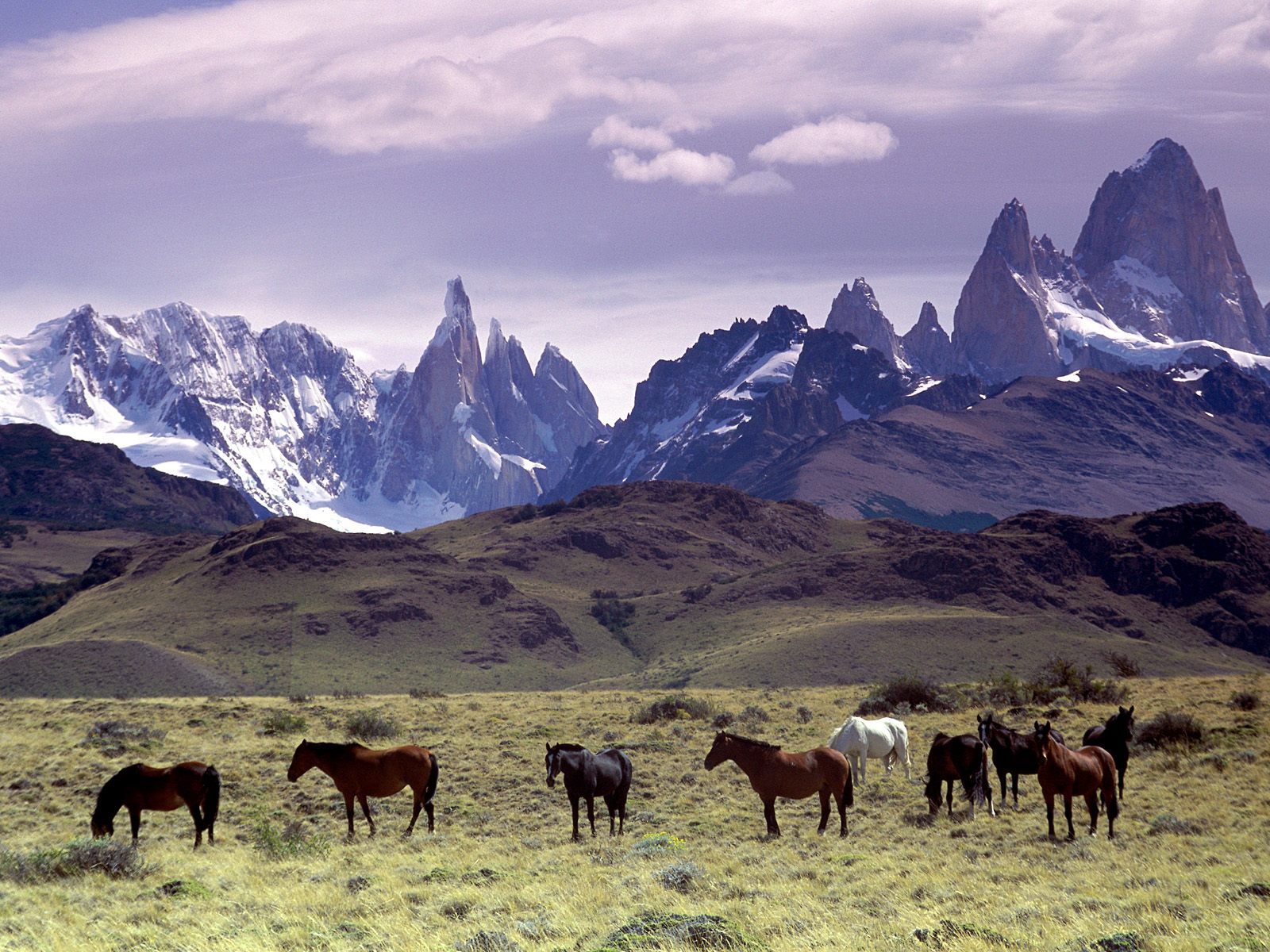
If I could, I would move to Patagonia where the mountain air blows clean down the hills and the sun sets in angles over the steppes. I found this place through fantasy-escape-mode, a very handy mental tool I employ when things get bad in my real world, such as being an allergy-sufferer in the worst pollen season in recollection. It was on a Monday that I hit the search engine and typed ‘pictures of mountains.’ I wanted something lofty and majestic to put as my desk-top background so that, in between my clerical tasks, I could escape to another land. I searched for mountains and that is where the love-affair began.

A picture popped up: low steppes with a herd of horses grazing and snow-tipped peaks rising into the sky. I can’t explain what happened to me when I saw this place. My mind stilled, settled into itself. I imagined cool, dry air flowing into my lungs. I imagined lying on the stony ground, the wind rustling the grass around me, the sky stormy-blue overhead. This picture called to me. If this were Star Trek, I would have said, “Beam me over, Scotty.” Even the soles of my feet wanted to walk barefoot over those stones.

Still, it was just a picture. I had no real idea where this was. However, I did want to know.

I have the kind of imagination that, once activated, is a bit like a baking soda and vinegar project. Once two things combine (place and longing) a chemical reaction occurs that cannot be stopped; it has to run its course. I did a new search to see if I could locate to origin of my fantasy-picture. Did I mention determination and persistence as part of this potion? Once my mind sets to a track, it does not deviate until the mission is accomplished. It was easy to discover the picture was taken in Argentina Patagonia. Patagonia! A word of legend, buried in my psyche like a forgotten bicycle in an old garage. Did I actually know anything about Patagonia, or was it the romance of the name I found alluring?

I searched google maps and found Patagonia as the southern-most region in South America, bridging the mountains between Argentina and Chile. I looked at the map and asked myself a question. Where, along that mountain range, did I think my fantasy-picture was taken? Of course, I had no reference beyond the photograph, so I opted to utilize instinct and see where it got me. It got me to El Chalten, a tiny town located in Los Glaciares National Park, population 200. I pulled up pictures from the region, which is now heralded as one of the fastest growing tourist spots for back-packer, hikers, and mountain-climbers, and recognized a distinctive mountain peak from the photograph: Mt Fitzroy. I had found my dream destination!

El Chalten is a rare town, situated within a national preserve. There are few year-long residence, but they host a rapidly growing number of tourists each year. Being at the more southern sphere of the globe, they have alternate seasons to the ones we have here in Virginia. Their peak summer season is in January and February, when we’re bundling up around wood stoves and under blankets. From the little I have learned, they have a cool, relatively dry, unpredictable climate. Wind is a near-constant companion and the weather can change in a flash. The hike to give you the best view of Fitzroy takes two days and is, by the accounts I read, not too strenuous and worth the effort. Their winters are cold, and windy, but not as harsh as their far northern counter-parts. And the park is stated by all who visit to be spectacular year-round. I say, what’s not to like?

Aside from the notable absence of over-abundant greenery, other things appeal to me about Patagonia. I like extremes of light, like the high-northern slant of sun seen in Scotland. I like unpredictable weather, perhaps because I’m used to unpredictability from a life of living inside my own head. I like rolling steppes, sparse population, and strongest of all, I like the Andes Mountains. I can’t say what draws me to them; they exert some pull over which I have no domain. They call to me by name. In the center of my being, I feel their echo. Is it because I grew up under the looming presence of another mountain range, the Colorado Rockies? It is something imbedded in my Native American genetics that makes me wish to live in close proximity to their majesty?

I can’t answer these questions. I’ve never been very good at explaining myself to myself. The best I can say is I know I want to be there, that, part of me, while sitting in Virginia, smelling the first of the Honeysuckle bloom, longs to be far away, living in Patagonia.

Spring = Depression

No season is waited for with such longing as is Spring. Shaking off the cold of winter, the entire world bursts forth. Trees pollinate, plants propagate, and all variety of animals bring their own fierce joy to the season by mating. Baby everything’s are born, flowers, calves, sheep, horses. After that quiet dead of winter, all is renewed, alive, awake and ready to play. All, that is, except the allergy sufferer.

I found out I had allergies last year after developing asthma; prior to that my mysterious ill-health wore many cloaks: IBS, CFS, MCS, MDI, Fibromyalgia. Because I have a-typical symptoms, not the classic rhinitis, no one was looking at my collection of symptoms as being related to allergies. It took asthma to connect the dots. My lack of ability to breathe had to come from somewhere. We looked around and found, through allergy testing, that I am allergic. I am not violently allergic to any one thing, for which I am grateful. Instead, I am low-level allergic to many things; 43 things out of the 70 tested for, to be exact. After a lifetime of mystery illness, suddenly I have a name: allergies. I have indoor allergies, outdoor allergies, pet allergies, allergies to mold, food allergies, and early, mid and late season allergies to trees, weeds, and grasses. In short, the entire blooming world is making me feel sick! Faced with those kinds of odds, late last year, I began a regime of anti-histamines. Anti-histamines are wonderful. I no longer itch twenty times a day; I do not have repeated violent bouts of abdominal pain, my knees are not swelling, my joints don’t ache and, best of all, I can breathe.

My anti-histamines brought me relief over the winter months, while closed up with dogs and dust-mites, and so I headed into Spring with optimism and good cheer, believing I would manage to skip by, unscathed, through pollen season and into the heady summer.

I did not know then what I know now. The uncomfortable physical symptoms that had plagued me all of my grown life are not the greatest burden of an allergy sufferer. My anti-histamines, gallant though they are, cannot completely quell the itching, swelling, sneezing, wheezing, coughing, and aching joints that accompany my allergic reactions to the most pollinated spring in known memory. They did a pretty good job of it. Had it been only for those, I would not complain. But, allergies have an undertow, a hidden foe that lives beneath the radar, a shadow condition that no one talks about and that is Allergy-Induced Depression.

I have always hated the Spring. Each April, as the world around me bursts forth in plant life and song, I want to crawl into bed, pull the covers over my head and sleep and until I somehow feel well enough to be alive. Over time, I came to accept this aberration of my mood unique to spring. I identified this time of year as one where I, in contrast to all else around me, wanted to go into hibernation while everything else was coming out. What I did not fully realize until this very Spring was the reason behind my desire to hibernate. My anti-histamines do a very nice job of keeping the other symptoms at bay; they do nothing for the lead-headed, mind-numbed, slowed-way-down, utterly exhausted feelings arising from allergy-induced depression. I know it is not my life. I love my husband, my children, my community, and my place of employment. I have a multitude of good things going on I wish to continue. My life is not to blame. The problem is in my brain, my broken brain, like a clock that has seasonally stopped ticking, even now, I cannot say when my brain will begin to tick again.